Duunia · Illustration
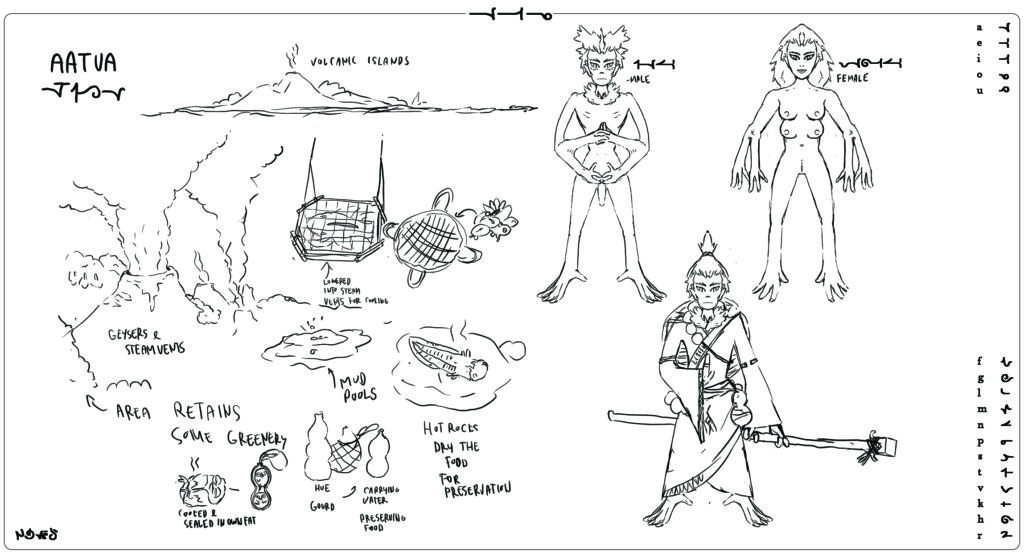
Aatua
Duunia Race Concepts

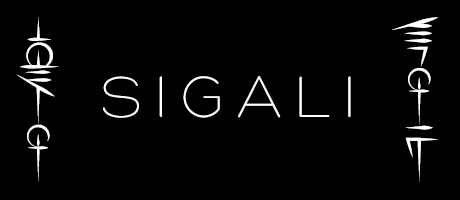
The scratched lettering of the Sigali.
Project note
Sigali is not so much written as cut.
The script developed from the anatomy of the Sigali hand. The tough, elongated claw of the forefinger makes the long strokes: scratches, downward cuts and repeated scores dragged through whatever surface is available. The shorter hooked claw of the thumb catches across these marks, pulling curves, hooks and cross-strokes back through them. Much of the script’s distinctive shape comes from the movement between those two claws — cut, catch, pull, release.
It can be scratched directly into wood, bone, metal and skin, so the letterforms favour gestures that survive difficult materials: sharp points, deep verticals, clustered parallel marks and hooked curves. A word carved into soft bark might be loose and fluid; the same word worked into iron becomes spare and angular. The surface leaves its own accent on the writing.
This physical origin also gives Sigali writing a particular relationship with permanence. A mark takes effort. It removes material, leaves a scar, or wears down a claw. Writing something down is therefore rarely an invisible act. Names, warnings, ownership marks, records and promises all leave evidence that somebody was there.
The typeface translates those scratched forms into a digital alphabet while keeping their uneven weight and directional movement. It is less an attempt to make Sigali writing perfectly geometric than to preserve the feeling that every character began as a wound in a surface.
Related
Adjust the site for this browser. Your choices are remembered on this device.
These controls improve presentation preferences; they are not a substitute for accessible content, structure, labels and keyboard behaviour.